
This column highlights the experiences and perspectives of leaders and volunteers within the IEEE Photonics Society, offering members a closer look at the individuals shaping the community. Through Q&A-style interviews, readers gain insight into their career journeys, contributions to the field, and thoughts on the future of photonics, the broader industry, and professional development.
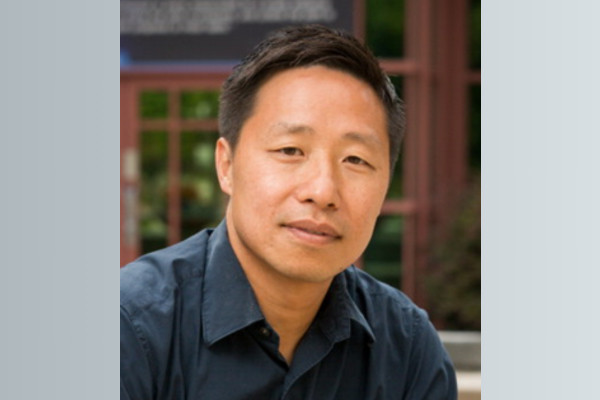
In this edition, we feature Zhi M. Liao, workforce manager for the National Ignition Facility & Photon Science (NIF&PS) Directorate of the Lawrence Livermore National Laboratory (LLNL) and Technician Education Representative on the IEEE Photonics Education Committee. In his role at LLNL he oversees the directorate’s recruiting strategy, onboarding program and workforce and leadership development.
Prior to his current position, Liao spent 20+ years in a technical role with expertise in nonlinear optics, adaptive optics, and laser-induced optic damage. He contributed to many of LLNL’s successful laser projects, including the Fiber GuideStar Laser, Mercury Laser, MEC-U (Matter in Extreme Conditions Upgrade) and NIF. He worked on developing models for predicting optics lifetimes for NIF and co-led an integrated team that successfully commissioned a brand-new NIF optic: the fused silica debris shield. His contributions have earned the DOE Secretary of Energy Achievement Award, DOE NNSA Excellence Award, as well as LLNL Director of Operation’s Excellence Award.
On the IEEE Photonics Education Committee, Liao serves in a key leadership role, guiding initiatives that enhance technician and trade-focused education. This includes promoting skills-based, hands-on instructional approaches and offering insights that help connect the Society with AAS education and research in optics and photonics, supporting local and regional workforce development.
Liao obtained his B.S., M.S., and Ph.D. in optical engineering at the University of Rochester, working under Dr. Govind Agrawal on nonlinear fiber optics.
Can you tell us about your journey into photonics and workforce development? Share any key inspirations or turning points that set you on this path.
My journey to photonics is full of happenstance. I enrolled at the University of Rochester to major in electrical engineering because I thought I had a general sense of what it involved. One of my freshman friends was taking an introductory course in optical engineering, and one day I sat in on the class while I waited for him so we could hang out afterward. That’s how I discovered optics. I decided to switch majors, and the rest is history. An experience like mine is probably not uncommon, and it’s a big reason I’m passionate about outreach and recruitment for optics education at the K-12 level. Career opportunities in optics and photonics have grown rapidly and now span virtually every technology sector, including consumer products, health and medicine, energy, and national security.
My path to workforce development began when I volunteered at my organization – the National Ignition Facility and Photon Science directorate – to help organize events for our summer interns. I had interned at LLNL as an undergraduate, and that experience strongly shaped my career decisions, it motivated me to pursue a PhD and reinforced my desire to work at a national laboratory. I wanted to give back to the internship program that had meant so much to me. That initial involvement led to additional roles, including university recruiting, building laser demos for outreach, serving on committees that provide tuition assistance or recognizing staff who exemplify our positive culture. Over time, this work evolved into a dedicated workforce development role, with responsibilities ranging from academic engagement and recruiting to staff retention and cultivating an innovative, supportive culture.

Why is supporting technician and trade development essential to the success of IEEE Photonics outreach and education efforts?
At LLNL, our mission relies on a collaborative approach to solving some of the nation’s most challenging problems. Our teams include PhD scientists, engineers, technicians, and skilled trades, each with a distinct role, and each dependent on the others to deliver results. Without a strong technician and trades workforce, even the best ideas and designs cannot be built, tested, deployed, or sustained.
IEEE’s Photonics outreach and education efforts ensure that the best curriculum and educational materials are shared broadly across all of the institutions. Their outreach effort is critical in building and maintaining a sustainable pipeline of talented students.
Looking ahead, how do you see emerging technologies and industry trends shaping the demand for technicians, and what unique contributions can they make to help companies and organizations succeed?
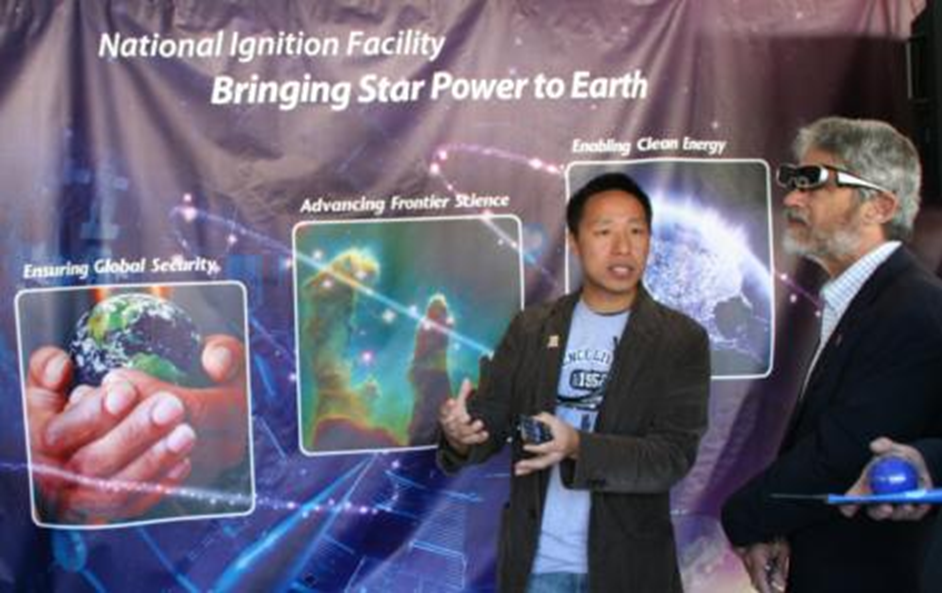
Fusion ignition in 2022, where more energy was produced than the input laser energy delivered to the target, helped launch what some are calling the “Age of Ignition.” In addition to providing invaluable national security data, this breakthrough has brought the prospect of fusion energy closer than ever. We have achieved ignition many times now, and in that time more than $10 billion in private investment has flowed into commercial fusion energy globally. Many of these efforts are laser-based, or at minimum will rely on lasers and advanced optical systems for precision diagnostics, alignment, controls, and metrology. This would certainly mean a surge in demand for technicians where they translate designs into working systems, sustain day-to-day operations, and provide hands-on expertise that can help companies and organizations move from breakthrough demonstrations to scalable capability.
From your experience, what gaps exist between the skills students gain in technician programs and the requirements of the photonics workforce?
In the national laboratory or emerging industries setting, the skills that the students gain from their technician education program often provide a strong foundation to begin working in high-tech environments. However, the students must possess a growth mindset and a willingness to continue to learn because the technology, tools, and processes evolve quickly. In addition, big challenging projects are rarely done in isolation. Students often need more experience collaborating across disciplines, communicating clearly with others like engineers and scientists, and understanding how to operate within complex organizations with formal processes.
How can a collaborative, community-driven approach improve technician workforce readiness, and are you involved in any efforts to build these kinds of ecosystems?
Each technician program has a unique history, which means each one comes with its own strengths and gaps. A collaborative, community-driven approach helps by spreading what works, avoiding repeated missteps, and aligning training more closely with real workforce needs. In 2026, I convened a meeting of more than a dozen educators, spanning optics and photonics programs at universities and community colleges, along with stakeholders from national laboratory, private industry, and nonprofit organizations. Together, we are launching a national effort for optics and photonics education called OPEN (Optics Photonics Education Network). OPEN aims to be a community where educators and stakeholders can share best practices, exchange resources, and build a stronger sense of connection as we work together to address shared challenges in technician workforce readiness.
What specific pre-university outreach strategies do you suggest to better inform secondary school students (13-18), teachers and parents about technician pathways?
This is a challenging issue that the whole optic/photonics industry is facing, not just technicians. This is a relatively new field of science and technology with relatively few degrees and training programs. Efforts are often siloed regionally. Traditional university-hosted outreach that brings in a dozen or two students each year can be valuable, but it tends to be staff-intensive, mixed in outcomes, and difficult to scale.
Mike McKee (UCF) has a game-changing idea: the Teacher Ambassador Program (TAP) trains high school science teachers to advocate for education careers in optics/photonics and each trained teacher can be a continuous ambassador for the industry for years to come.

What strategies have you found most effective for helping mentees build both technical skills and professional confidence? Was there a mentor in your own career who influenced how you approach mentoring today?
Mentoring has been most effective for me when it builds technical capability and confidence at the same time, in a way that feels structured but safe. I am extremely fortunate to have many important mentors over my career that have influenced my approach to mentoring today. I was blessed to have several people see potential in me before I had the confidence to see it in myself, and they encouraged me to pursue opportunities that felt out of reach. They also helped me understand that it is okay to make mistakes (we all have), and what matters is learning quickly and moving forward. That mindset is something I try to pass on to every mentee.
Do you have a favorite book, movie, or podcast that has influenced your work or leadership style?
One of my favorite movies is Forrest Gump. It has influenced how I think about leadership because it is fundamentally about leading by example. He consistently does what he believes is right, not because of what he will get out of it, but simply because it is the right thing to do.
That resonates with me personally. I do not consider myself especially eloquent, and I do not always have a grand vision for how things should be. What I do have is a strong pull toward what I think is right, and I try to put my energy into work I am genuinely passionate about. In practice, that often means showing up consistently, doing the work, and letting actions communicate values.
What are a few fun or interesting facts about you that others might not know, such as a hobby, talent, and/or personal interest?
My family and I love to travel to discover different cultures and embrace local customs, especially their food. We have traveled to more than 20 countries and hope to keep doing that together. Travel has become a meaningful family bonding experience for us, and we also feel it helps our children build more tolerance and respect for others.
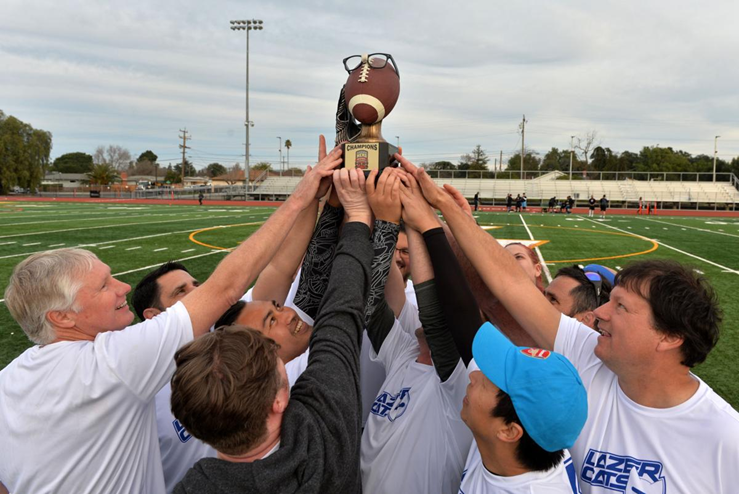
A fun fact about me is that I’m also a big sports fan, especially team sports, because they are a great environment for building camaraderie and interpersonal skills. One of the coolest events I’ve been part of was the Nerd Bowl, a (briefly) annual Bay Area flag football tournament among scientific and technical institutions such as Lawrence Livermore National Laboratory, Sandia National Laboratory, SLAC National Accelerator Laboratory, and Facebook. It was a fun way to show the sporty side of scientists and techies.