
The IEEE Photonics Society’s Young Professional Spotlight series highlights the experiences, achievements, and perspectives of emerging leaders and early career grassroots organizers shaping the future of photonics. Through Q&A-style interviews, readers gain insight into the career paths, research interests, professional accomplishments, and personal journeys of Young Professionals across the global photonics community.
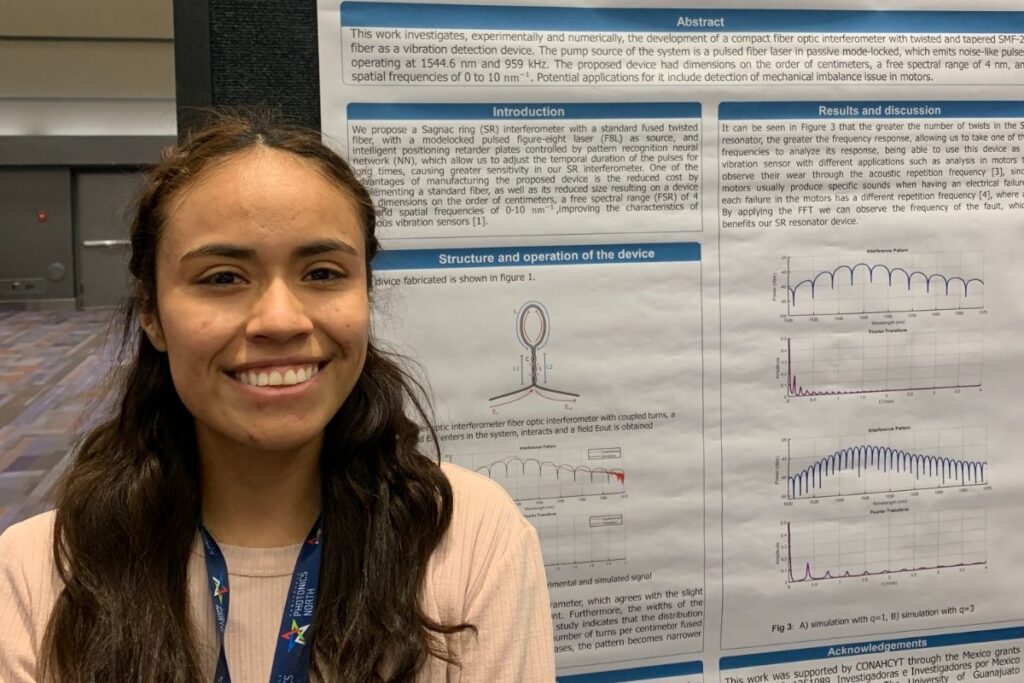
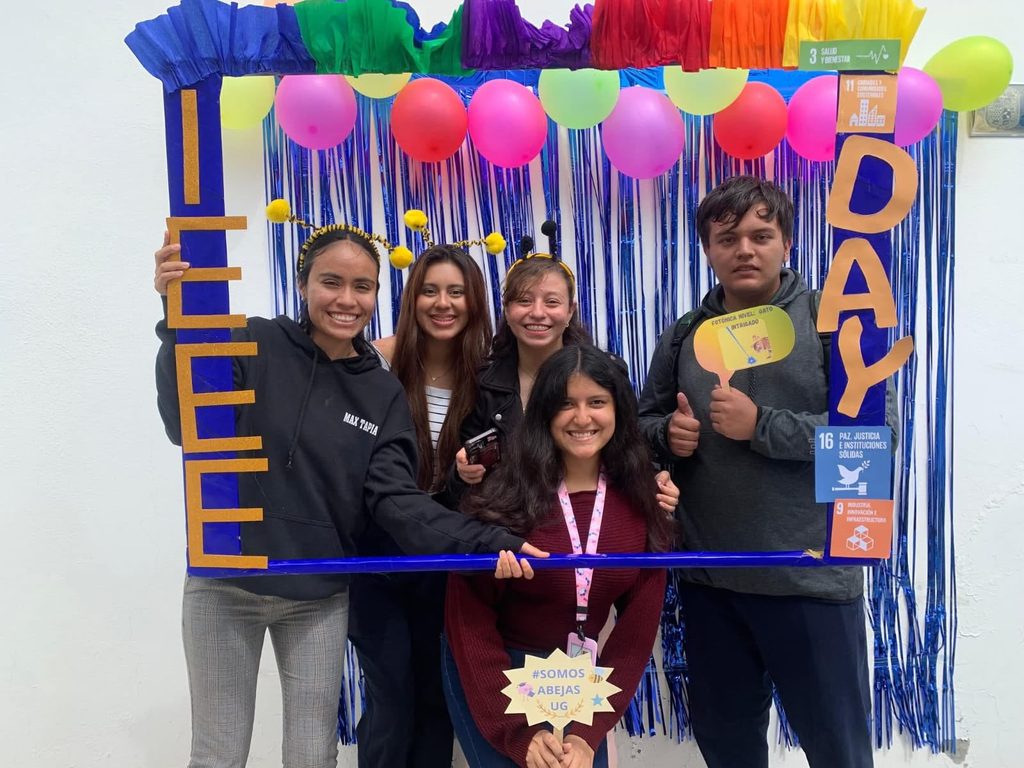
In this edition, Stephanie Guadalupe Hernández García of the Universidad de Guanajuato, Mexico, is spotlighted. As an emerging photonics researcher, she is a dedicated IEEE volunteer whose work focuses on fiber-optic technologies, optical sensing, and photonics applications. Stephanie is a former Chair of the IEEE Photonics Society Student Chapter at her university and demonstrated a strong commitment to student engagement, leadership, and advancing opportunities for women in photonics. Under her leadership, the Chapter received the IEEE Photonics Society’s Most Improved Chapter Award.
What innovative work, research, or initiatives are you currently involved in that are making an impact within the photonics community (technical, educational, outreach, industry, and/or community-based)?
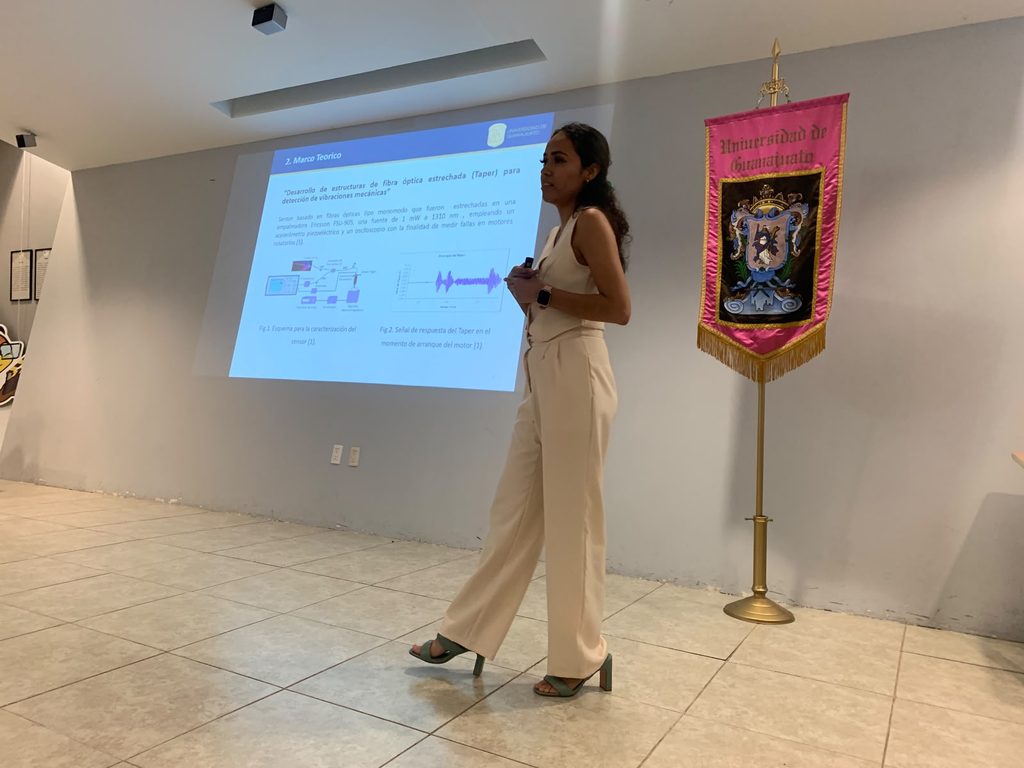
My doctoral research focuses on the development of fiber optics-based acoustic sensors. I also participate in various projects within the research group related to sensors and complex pulsed laser sources. I am a researcher because I am convinced that we can all contribute to knowledge, and by working together we can improve people’s quality of life. I try to focus the projects I collaborate on into concrete applications that can benefit society, whether by developing new techniques or contributing ideas to the scientific community.
Furthermore, I participate in numerous science outreach projects in the community, from leading science workshops for children and young students to organizing outreach events within my community, making science accessible to everyone.

What first drew you to the field of photonics? Was there a defining moment, experience, mentor, or inspiration that led you to pursue this path?
I was drawn to technology because I’ve always been fascinated by it. I find everything that can be achieved with it captivating. Ever since I was a child watching movies like Big Hero 6, where each character has distinct qualities reflected in their gadgets, I’ve been amazed by it ever since.
I focused my studies on a technology-related career, and at university, I discovered optics and photonics. When I saw the labs, the projects they were developing, and the people passionate about their work, knowing there were no limits (the only limit being the speed of light haha), that’s when I decided this was what I wanted to do.
To this day, photonics has given me wonderful things. I’ve met incredible people all over the world; I’ve grown as a person, and every day I’m more convinced that we’re on the right path. Doing science is the right path, and photonics is the right path.
What challenge or problem do you aim to address through your work, and why is solving it important to the future of photonics or society as a whole?
The main challenge I aim to address is designing a fiber optic device that can contribute to the development of new technologies, using complex dynamic pulses generated by fiber optic lasers as a light source. Previously, it was believed that complex dynamic pulses were unsuitable for sensing devices; however, in recent years, this paradigm has begun to change. Solving this problem is important for the future of photonics, as it would allow us to develop more and better technologies, leveraging qualities we may not even have imagined, and then, with all that technology, help the world.
What impact has your work had so far on students, researchers, industry, communities, the general public, or broader scientific ecosystem you serve?
Students I’ve had in my university classes and in the workshops we share with the community have been amazed by what we tell them science and technology can do. The central message I try to cover is that a good idea can come from anywhere, and that the more we learn, the more we can contribute. And if that contribution helps others, all the better. Within the working group, we all motivate and give each other feedback to improve our ideas, always learning from one another and never forgetting that we’re not walking this path alone.
How do you engage, mentor, motivate, or inspire others through your professional work, volunteer service, or leadership activities?
Leading by example is one of the best guides. When we give a class, lead a workshop, present our work, or simply spend the day, we are setting an example for others, and we should always attempt to be a good example. I try to involve others in the work, motivating them to discover their passions and motivations so they can take advantage of their talents and all the good they have to offer. I always try to ensure that science is not just expository, but an environment where they get involved, where they experience it, sowing curiosity.

Is there a book, paper, mentor, resource, or experience that has significantly influenced your career or perspective and that you would recommend to others?
When I read Daniel Keppeler’s work (10.1126/scitranslmed.abb8086), I became completely convinced that I wanted to continue studying photonics in greater depth. It shows that there are current problems and that photonics can be a new window of possibilities that can help us solve them. Moreover, I’d like to mention one of my favorite books, The Little Prince, not because it explicitly deals with science, but because it is about how to do science, promoting the power of imagination, the value of emotional connections, and the importance of looking beyond the obvious. And above all, I want to thank my mother for always supporting me in everything I’ve needed. She will always be my model of unending strength and selfless devotion.
What is a fun fact, hobby, passion, or personal interest that colleagues and peers might be surprised to learn about you?
Beyond science, I have many passions, including animals, especially dogs, and advocating for their well-being. I also enjoy exercising and have practiced Polynesian dance for several years, which helps me relax, express myself, and find happiness. After a busy week of experiments and challenges in the lab, I love unwinding with K-dramas. I believe our interests outside of work are essential to our well-being, helping us gain new perspectives, maintain balance, and grow both personally and professionally.