
Researchers develop a metasurface that combines an optical lens and focus-correcting functionalities into one flat device
July 27, 2026
Keeping cameras in focus without constant refocusing may soon become much simpler with an ultrathin optical device that combines nanophotonics and computational imaging. Researchers at the University of Science and Technology of China have developed a flat “cubic-metalens” that captures clear images across a wider range of distances, enabling thinner, more stable cameras for biomedical imaging and machine vision.
Conventional cameras have a limited depth of focus, causing images to blur when objects move closer to or farther from the lens. Although wavefront coding (WFC) extends the focus range, conventional WFC systems require separate optical components, making them bulky and difficult to miniaturize.
To overcome these limitations, a research team led by Professor Yonghua Lu developed a cubic-metalens that integrates both the imaging lens and the wavefront-coding phase mask into a single ultrathin metasurface. Published in the IEEE Journal of Selected Topics in Quantum Electronics on November 20, 2025, the study demonstrates a compact computational imaging system that delivers sharp images over a much wider focus range without increasing the complexity of the optical setup.
Unlike conventional lenses, the cubic-metalens uses nanoscale silicon structures to manipulate light. Combined with a commercial CMOS image sensor and computational reconstruction using a Wiener filter, it restored high-quality images even when objects were displaced by at least ±3 cm from the focal plane, where images from a conventional metalens became severely degraded.
The researchers also evaluated the system under more challenging conditions by introducing transparent obstacles, including a thick glass plate and a combination of glass and water, into the optical path. Despite these disturbances, the cubic-metalens consistently produced images that could be accurately reconstructed. “High-fidelity images can be computationally restored even in the presence of transparent obstacles,” says Prof. Lu.
By combining multiple optical functions into a single ultrathin device, the cubic-metalens reduces the need for precise mechanical focusing while maintaining image quality across changing imaging conditions. “Given its compactness and robust defocus resistance, the proposed cubic-metalens holds great potential for highly stable integrated cameras and applications in biomedicine and machine vision,” says Prof. Lu.
Reference
Title: Defocus-Resistant Computational Imaging With Wavefront-Coding Metalens
Journal Name: IEEE Journal of Selected Topics in Quantum Electronics DOI: 10.1109/JSTQE.2025.3634773
Author Names: Xiaofei Yu et al.
Image
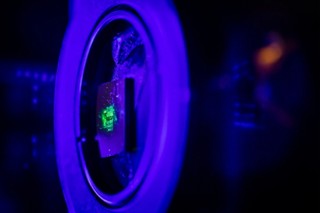
Caption: The proposed cubic-metalens combines lens and phase-mask functions for advanced imaging.
Media contact:
Press Release Source: IEEE Photonics Society
Media Contact First Name: Kristen
Media Contact Last Name: Amoroso Media Contact Email: k.amoroso@ieee.org
State of Origin: New Jersey, United States
Telephone: +1(732) 562-6694