

June 16, 2026
The project presents the architecture of deep space optical communications, highlighting its reliability for supporting future deep space missions
Future deep space missions will require communication systems with high data rates that are not achievable with current radiofrequency-based systems. NASA’s Deep Space Optical Communications project is a technical demonstration for establishing optical communications for deep space missions at Mars distances. A new report presents an overview of the system and operational results of the ground laser transmitter from a two-year mission launched together with NASA’s Psyche spacecraft.
Maintaining reliable communication during space missions is critical. Future missions—especially crewed missions to Mars—are expected to generate far more data than current systems can handle. NASA’s existing radiofrequency (RF)-based Deep Space Network (DSN), a global system of ground stations, could become a bottleneck as data demands grow.
To address this challenge, scientists are exploring free-space optical communications (FSOC), which use lasers instead of radio waves. FSOC can complement RF communications to provide future missions a high-data rate channel that is less constrained by the crowded RF spectrum. NASA’s Deep Space Optical Communications (DSOC) project was launched to test this technology over distances comparable to Mars ranges. DSOC uses a three-terminal architecture consisting of a ground transmitter, a flight (spacecraft) terminal, and a ground receiver.
In the new report, a team from NASA’s Jet Propulsion Laboratory (JPL) in Southern California, USA, presented a comprehensive overview of the DSOC architecture and its ground laser transmitter (GLT) operational results. The study was made available online on November 24, 2025, and was published in Volume 32, Issue 1 of
“NASA’s DSOC demonstration successfully showed that optical communication technology is ready to support future deep space missions,” says Dr. Angel E. Velasco, the paper’s lead author.
The system’s flight terminal—a laser transceiver—was launched aboard NASA’s Psyche mission in October 2023. The spacecraft is traveling to the asteroid 16 Psyche in the region between Mars and Jupiter and will arrive in 2029.
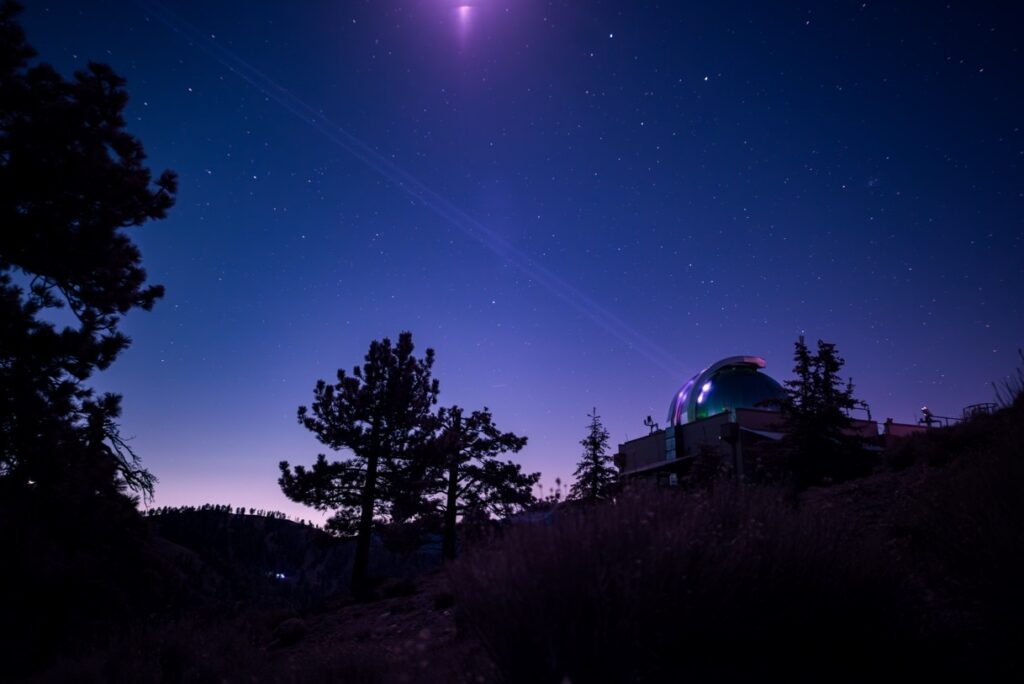
A key component of DSOC is the ground laser transmitter, located at the Table Mountain Facility at JPL’s Optical Communications Telescope Laboratory (OCTL). The GLT uses a 1-meter telescope and a powerful 5.6 kW, modulated uplink laser transmitter. Because the laser beam has high-power with narrow divergence and the GLT facility is located near four major airports, it is equipped with an automated outdoor laser safety system. This system automatically shutters lasers to prevent unintentional irradiation of aircraft and overpassing satellites.
The ground laser receiver (GLR), whose primary aim is to track the downlink signal from the flight laser transceiver, is located at the Palomar Observatory and utilizes the 5-meter Hale telescope. Furthermore, the telescope is coupled with a highly sensitive tungsten silicide superconducting nanowire single photon detector (SNSPD) array. Once received, the downlink signals are decoded in real-time.
The DSOC system was exercised extensively during its two-year prime mission, until September 2025, with weekly communication opportunities. The results demonstrated that optical communication can reliably support future missions to Mars and beyond. The system achieved peak downlink data rates at GLR of 267 Mbps at 55 million km and 8.3 Mbps at 400 million km corresponding to Mars closest and farthest ranges respectively. These dates rates are significantly higher than traditional RF systems which typically transmit less than 1 Mbps at comparable distances. In addition, the GLT demonstrated reliable operation in both day and night conditions, even at times transmitting through thin clouds. Notably, it showed high pointing accuracies at the microradian level, exceeding expectations and operated safely with no accidental aircraft or satellite illumination or damage to the GLT hardware.
Despite these successes, further work is needed to transition this technology demonstration to an operational system. An investment is needed to prepare for future missions and will require a global, ground-based optical communication network to mitigate weather-related disruptions and ensure continuous coverage.
“Overall, the DSOC hardware remains healthy and the DSOC team is excited to see how this success will translate to support optical communications in future NASA deep space and manned missions to the moon, Mars, and beyond,” concludes Dr. Velasco.
Reference
Authors Angel E. Velasco et al.
Title of original paper: Operational Results From the Deep Space Optical Communications (DSOC) Project Ground Laser Transmitter
Journal: IEEE Journal of Selected Topics in Quantum Electronics
DOI: 10.1109/JSTQE.2025.3636824
Affiliations NASA Jet Propulsion Laboratory, California Institute of Technology, USA
Additional information for EurekAlert
Latest Article Publication Date: January–February 2026
Method of Research: Case study
Subject of Research: Not Applicable
Conflicts of Interest Statement: N/A
Image
Image title: The ground laser transmitter of the Deep Space Optical Communication (DSOC) system
Image caption: The DSOC GLT hardware located at the JPL Optical Communications Telescope Laboratory (OCTL) outside of Wrightwood, California supported validating the optical communications technology for deep space missions by safely and accurately pointing its kilowatt class lasers with microradian level accuracy to the Psyche spacecraft up to 490 million km away.
Image credit: NASA/JPL-Caltech
Image source link: https://science.nasa.gov/photojournal/dsocs-table-mountain-facility-
License type: Public domain
Usage restrictions: No restrictions. Image is free to use with no permission necessary.
Press Release Source: IEEE Photonics Society Media Contact First Name: Laura A. Media Contact Last Name: Lander Media Contact Email: l.lander@ieee.org Media Contact Phone Number: 1 (732)-465-6479
State of Origin: New York, USA