

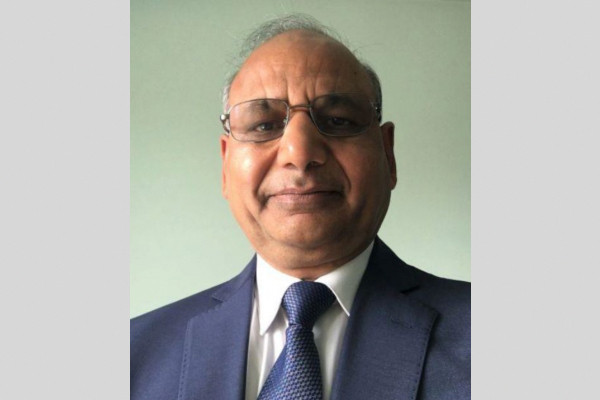
Born in Dhikana, a small village in Uttar Pradesh, India, Naresh Chand, Ph.D., IEEE Life Fellow and IEEE SIGHT Representative, grew up surrounded by skilled craftspeople, farmers, and small cottage industries. As a child, he was fascinated by the way people around him built, repaired, and created things using simple tools and materials. That early curiosity would become a defining characteristic of his career as a scientist and engineer.
Chand’s path to an international career in technology was anything but conventional. After earning an M.Sc. in Physics from Meerut University, he went on to complete an M.Sc. (Tech.) in Electronics at BITS Pilani, specializing in Microwave Engineering and semiconductor devices and graduating with a Gold Medal. He began his professional career with the Department of Electronics, Government of India, contributing to the development of India’s electronics and semiconductor industry.
Five years later, a British Commonwealth Scholarship took him to the University of Sheffield, where he earned his M.E. and Ph.D., followed by postdoctoral research at the University of Illinois Urbana-Champaign. Those experiences ultimately led him to one of the world’s most influential research environments: Bell Laboratories.
Advancing Semiconductor and Optical Communications Technologies
At Bell Labs, Chand worked under renowned scientist Dr. A. Y. Cho and established a Molecular Beam Epitaxy laboratory focused on GaAs-on-Silicon technology. His research contributed to the development of the first non-hermetic 1310 nm communication lasers and long-life, high-power 980 nm pump lasers used in undersea optical communication systems. His contributions were recognized with elevation to the IEEE Fellow grade.
Over a 45-year career spanning four countries, Chand continued to evolve with the technology around him. He moved from semiconductor research into optical communications and held senior positions at Lucent Bell Labs, Agere Systems, BAE Systems, and Huawei Technologies.
At BAE Systems, he contributed to Free-Space Optical Communication programs. Later, as Director of Huawei Technologies’ U.S. R&D Centre in New Jersey, he worked with research teams across the United States and China on optical broadband access technologies. He retired in 2019.
His career produced approximately 180 publications and 15 patents, with nearly 75% of his publications originating from his years at Bell Labs.
Investing in the Next Generation
For Chand, retirement was not an ending—it was an opportunity to invest in the future.
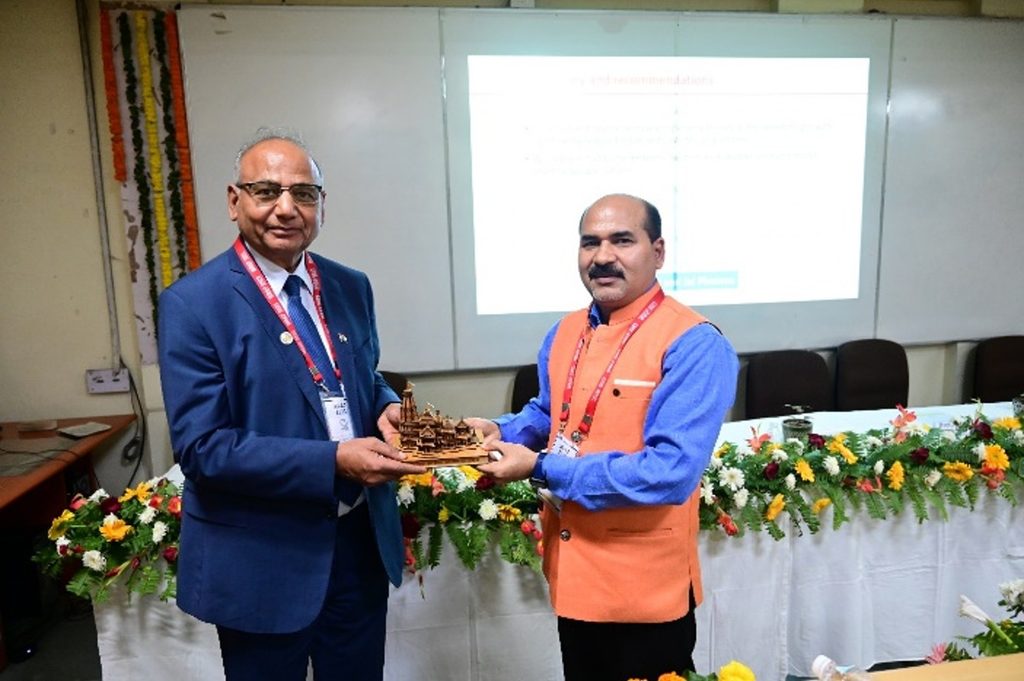
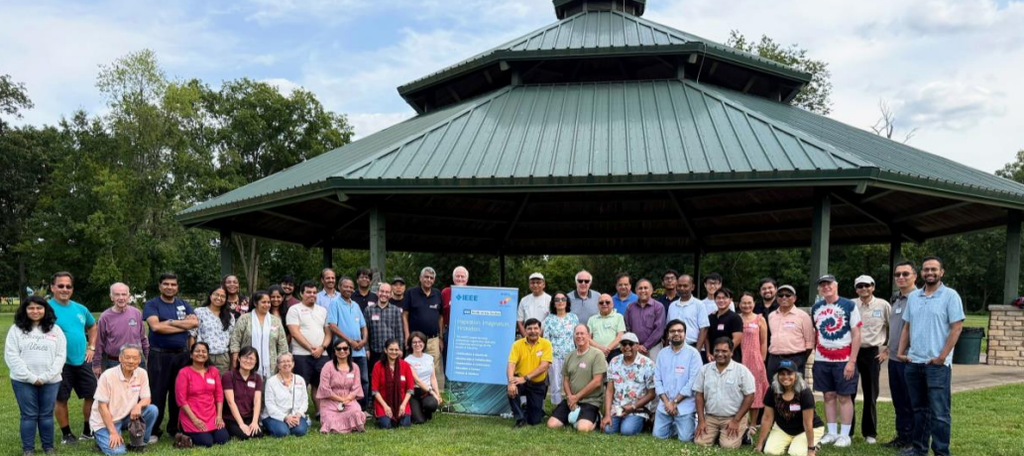
He founded Prakash Bharati, a community that has brought together nearly 400 photonics professionals across India, including researchers, engineers, academics, and students. The group’s mission is to strengthen India’s photonics ecosystem by encouraging collaboration, mentoring emerging talent, and connecting academia and industry.
His commitment to the next generation also extends through his continued involvement with IEEE. Chand encourages students and young professionals to become active in IEEE Student Branches and technical Society Chapters, attend conferences, explore IEEE publications, and use professional networks to build meaningful connections.
For Chand, IEEE played an important role throughout his own career. Before the internet, IEEE journals provided a critical window into developments taking place around the world and helped him identify researchers, institutions, and opportunities for collaboration.

A Philosophy of Lifelong Learning
Looking back, Chand identifies several principles that have guided his career: curiosity, mentorship, persistence, adaptability, and lifelong learning. One idea in particular has shaped his professional philosophy: the importance of “lifetime employability” over “lifetime employment.” As technologies evolve, he believes professionals must continually expand their knowledge and skills and remain willing to step outside their comfort zones. His own career is an example of that philosophy. He moved across disciplines, organizations, countries, and technologies, continually seeking opportunities to learn and contribute.
Today, he sees tremendous opportunities ahead for students entering photonics, particularly at the intersection of photonics, semiconductors, artificial intelligence, optical communications, quantum technologies, and advanced sensing. His advice to the next generation is simple: build a strong technical foundation, find good mentors, stay curious, learn from setbacks, and look for ways to use your skills to benefit society.
From a rural village in Uttar Pradesh to the laboratories of Bell Labs and leadership of a global technology R&D organization, Chand’s story illustrates how curiosity and determination can open doors far beyond what a young student might imagine.
Bringing Photonics and Humanitarian Technology Together
As an IEEE Life Fellow, he continues to share the knowledge and experience gained throughout his career while helping connect and inspire India’s growing photonics community. His newest role provides another opportunity to extend that experience toward an area that has increasingly defined his work: using technical knowledge not only to advance technology, but to create meaningful societal impact.
In his new role as the IEEE Photonics Society’s IEEE SIGHT Representative on the Humanitarian & Public Imperative Committee, Chand will focus on strengthening collaboration with the broader IEEE SIGHT community, which works with underserved communities and local organizations to apply technology in support of sustainable development.
In this advisory role, he will help shape the Society’s humanitarian and public imperative initiatives while serving as a liaison with IEEE SIGHT to identify opportunities for collaboration among Photonics Society Chapters, SIGHT Groups, and other IEEE communities. He will also help advise on and encourage photonics-focused humanitarian activities and funding proposals that respond to locally identified needs, including applications of light-based technologies in affordable healthcare and diagnostics, clean water and environmental monitoring, renewable energy, agriculture and food security, communications and connectivity, STEM education, and community capacity building.
A key focus will be identifying opportunities where IEEE Photonics Society technical expertise, volunteers, Chapters, and educational resources can support sustainable, community-driven projects while strengthening pathways for joint Chapter and SIGHT activities.
Another current project includes leading an initiative to map the Society’s technical themes and activities to the United Nations Sustainable Development Goals (UN SDGs). The resulting resource will help publications, conferences, and other Society programs identify connections between advances in photonics and broader societal challenges and incorporate those connections into future programming.
Chand’s career demonstrates that the impact of engineering extends beyond the technologies created in laboratories. It also lies in how knowledge is shared, how the next generation is supported, and how technical expertise can be applied to challenges facing communities around the world.