

Throughout 2026, the IEEE Photonics Society Bangalore Chapter has been strengthening connections among students, educators, researchers, and industry professionals through a growing portfolio of technical education, outreach, and professional development activities. From month-long quantum optics training and hands-on photonics workshops to student chapter development and research presentations, these programs are helping make emerging technologies more accessible while creating pathways for deeper engagement in the photonics community.
Collectively, the activities demonstrate the important role IEEE chapters can play in connecting classroom learning with research, industry applications, and professional opportunities.
Taking Quantum Photonics from Theory to Practice
One of the Chapter’s most comprehensive educational initiatives was a 40+ hour blended course focused on Quantum Optics and Quantum Information technologies that enable photonics. Designed to demystify concepts that can often seem highly theoretical, the month-long program connected foundational quantum mechanics and linear algebra with practical photonic circuit modeling.
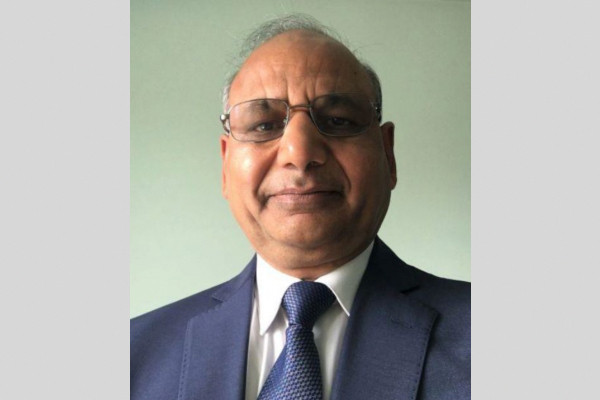
Led by Dr. Pragya Mishra, Postdoctoral Researcher at the Centre for High Energy Physics at the Indian Institute of Science (IISc), Bengaluru, the course brought together 45 IEEE members, including undergraduate and postgraduate students, researchers, and professors from across India.
Participants worked with Perceval simulation software to develop practical experience modeling quantum photonic circuits while also exploring recent research through literature reviews. Assignments, class tests, a mini-project, and a final examination provided continuous opportunities to apply and assess what participants had learned.
The hybrid format proved particularly valuable. Recorded lectures allowed participants to revisit mathematical derivations and simulation demonstrations at their own pace, while live discussions created opportunities to ask questions and work through difficult concepts. The program concluded with an in-person certificate ceremony at Sai Vidya Institute of Technology (SVIT), bringing participants, faculty, and volunteers together after a month of virtual learning.
The initiative was supported by Dr. Venkatesha M, Chair of the IEEE Photonics Society Bangalore Chapter and Dean of Innovation, Consultancy & Entrepreneurship at SVIT, along with students and faculty volunteers from the IEEE Photonics Society Student Branch Chapter at SVIT.
Beyond the technical outcomes, the program demonstrated a scalable model for advanced member education: combining accessible on-demand learning, live expert engagement, continuous assessment, hands-on projects, and local student chapter support.


Introducing Students to Photonic Quantum Information Technology
The Chapter complemented this long-format training with programs designed to introduce quantum technologies to students earlier in their academic journeys.
In early 2026, a “One Day Conclave on Photonic Quantum Information Technology” was held at Sri Sai Ram College of Engineering in Gudnahalli, Karnataka. The program introduced undergraduate engineering students and faculty to the foundations of quantum and photonics technologies and their applications in communication, computing, and information security.
The speaker program approached the field from several perspectives. Dr. T. Srinivas of IISc Bangalore discussed photonic devices and optical signal processing, while Dr. Srikanth R explored the realities of quantum cryptography in noisy communication environments. Mr. Prajwal N introduced career pathways and industry opportunities, and Mr. Karthiganesh Durai guided students through quantum gates, circuits, and emerging quantum machine learning concepts.
Importantly, the program did more than introduce emerging technologies. Discussions during the valedictory session encouraged students to ask what skills they would need, where research opportunities exist, and how they could begin preparing for careers in quantum and photonics.
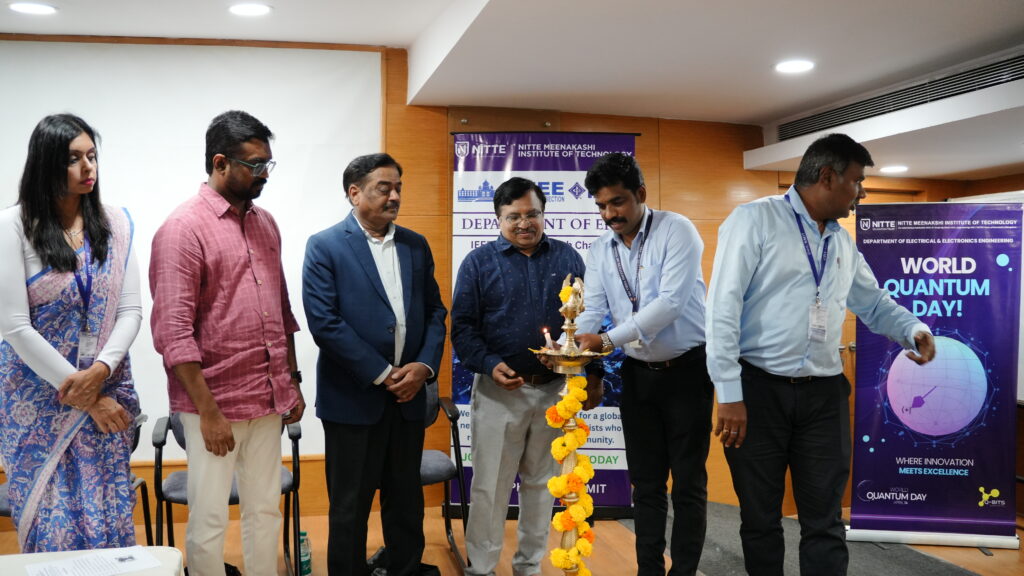
Just days later, Nitte Meenakshi Institute of Technology (NMIT) marked World Quantum Day with the inauguration of its IEEE Photonics Society Student Branch Chapter. Organized with the IEEE Photonics Society Bangalore Chapter and NMIT’s Q-BITS Quantum Tech Club, the event established a formal platform through which students can pursue technical activities, research collaborations, professional development, and IEEE opportunities in photonics and quantum science.
Dr. Srinivas Talabattula highlighted how student branch chapters can connect students with global professional networks and technical resources, while Dr. Rohit Ramakrishnan introduced quantum computing concepts, applications, and career pathways. Dr. Adishesha C.S. explored connections among photonics, sensing, aeronautics, and emerging digital systems.
Dr. Venkatesha Muniswamy also introduced students to opportunities available through the IEEE Photonics Society, including chapter grants, scholarships, conference travel support, and technology-for-good initiatives.
Technical quizzes, poster competitions, and interactive demonstrations transformed the inauguration into an active World Quantum Day celebration rather than simply a ceremonial chapter launch. Faculty Advisor Dr. Samanvita N, Branch Counselor Dr. Parameshachari B D, the IEEE NMIT Student Branch team, and student volunteers were also recognized for their roles in establishing the new chapter.
Connecting Microwave Engineering and Photonics Through Hands-On Learning
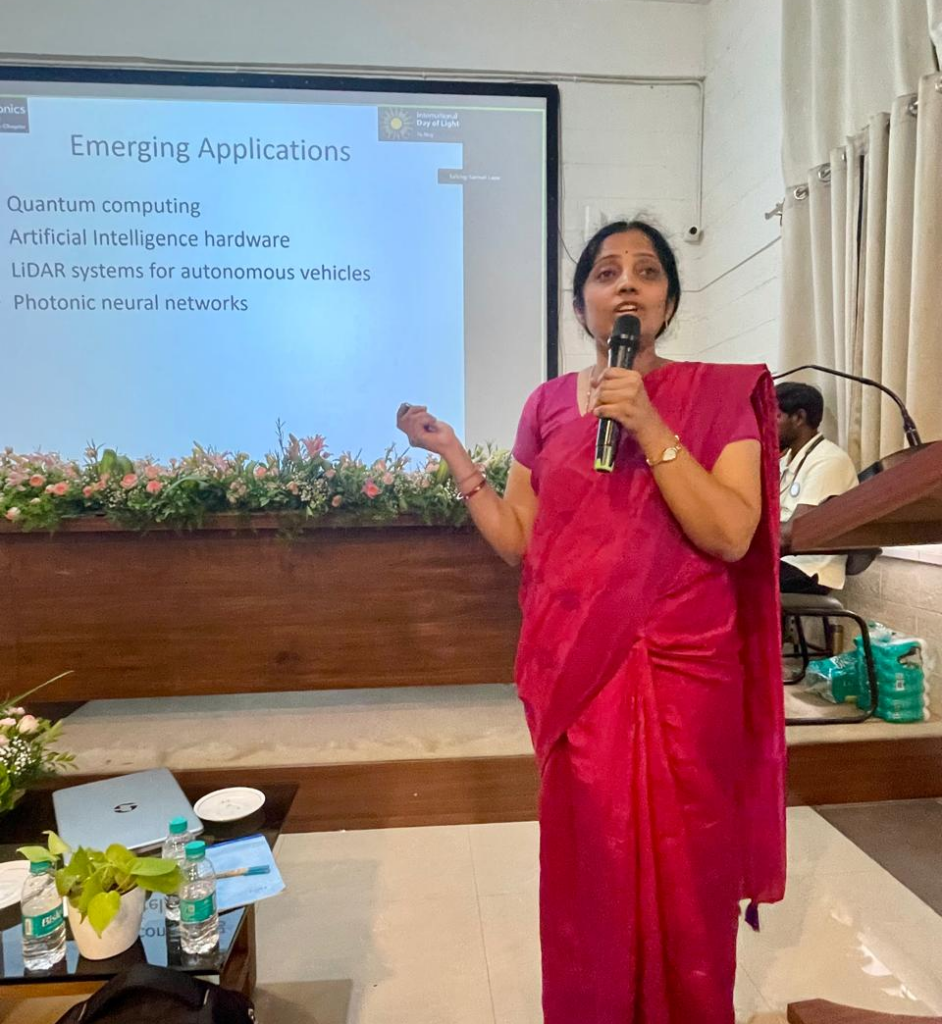
Hands-on technical education continued into Spring 2026 when the Bangalore Chapter partnered with the Department of Physics and IEEE Student Branch at Cambridge Institute of Technology North Campus for a Workshop on Microwave Photonics. The workshop connected electromagnetic theory, radar engineering, and optical technologies through a deliberate progression from real-world applications to practical modeling.
Dr. Meena Dasan of LRDE, DRDO introduced participants to microwave photonic radar technologies and the importance of signal fidelity in surveillance architectures. In the afternoon, Dr. Anup M. Upadhyaya, Vice Chair of the IEEE Photonics Society Bangalore Chapter, led a guided simulation session focused on optical sensor modeling.
Participants could adjust design parameters themselves and observe how their decisions affected sensor performance, including trade-offs between sensitivity and robustness. This theory-to-tool structure gave students a clearer understanding of how concepts discussed in the classroom translate into engineering design decisions. The workshop also demonstrated the value of connecting expertise from defense research, academia, IEEE professional communities, and student branches to enrich engineering education.

Celebrating Light Across the Photonics Spectrum
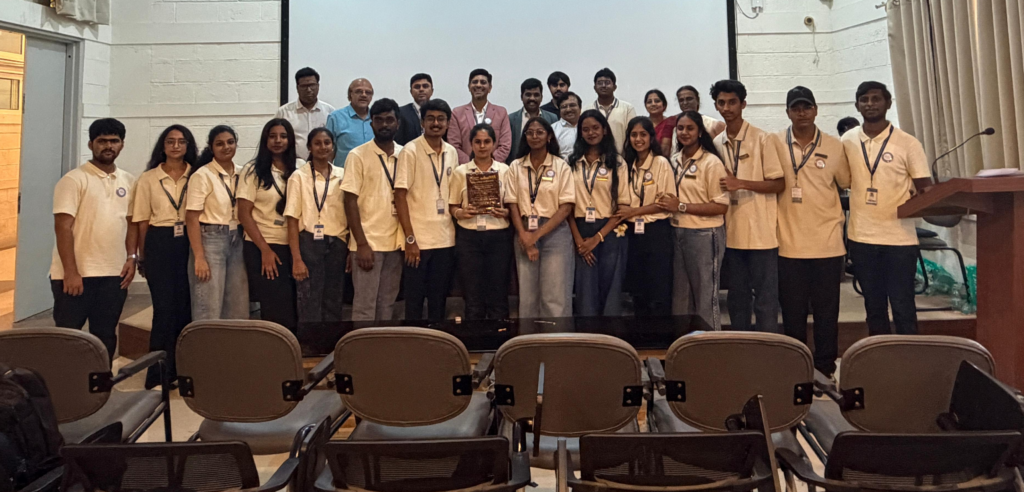
The Chapter commemorated the International Day of Light with a full-day symposium at Cambridge Institute of Technology North Campus. Rather than focusing on a single technology, the symposium presented photonics as an interconnected field spanning materials, devices, communications, sensing, computing, artificial intelligence, and quantum technologies.
Speakers explored research directions in photonics and optical communication, metamaterials, photonic integrated circuits, silicon photonics for AI hardware, machine learning-assisted Bragg grating biosensors, high-speed photonic interconnects, optical materials and multi-component fluoride glasses, and the convergence of quantum communication, quantum computing, and AI.
Contributors included: Dr. T. Srinivas, Dr. Venkatesha M, Dr. Deepak Kumar, Dr. Asha K, Dr. Nandhini V L, Dr. Chandrika T N, Mr. Prajwal N, Dr. Abhiram J, Dr. Rajaramakrishna R, Dr. Varun Raghunathan, and Dr. S. J. Krishna Prasad.
The breadth of the program gave undergraduate and postgraduate students, research scholars, and faculty an end-to-end perspective on the photonics technology landscape. Participants could see how fundamental materials research connects to device development, how devices become integrated systems, and how those systems ultimately enable technologies such as high-speed communications, biosensing, AI hardware, and quantum networks.
The session on photonic interconnects for high-speed data communication generated particularly strong engagement, prompting questions about data center requirements, system architectures, and implementation challenges. This broad thematic approach reinforced an important message: photonics is not an isolated discipline. Increasingly, it is an enabling technology connecting many of the most consequential areas of modern engineering.
Creating a Platform for Emerging Photonics Research
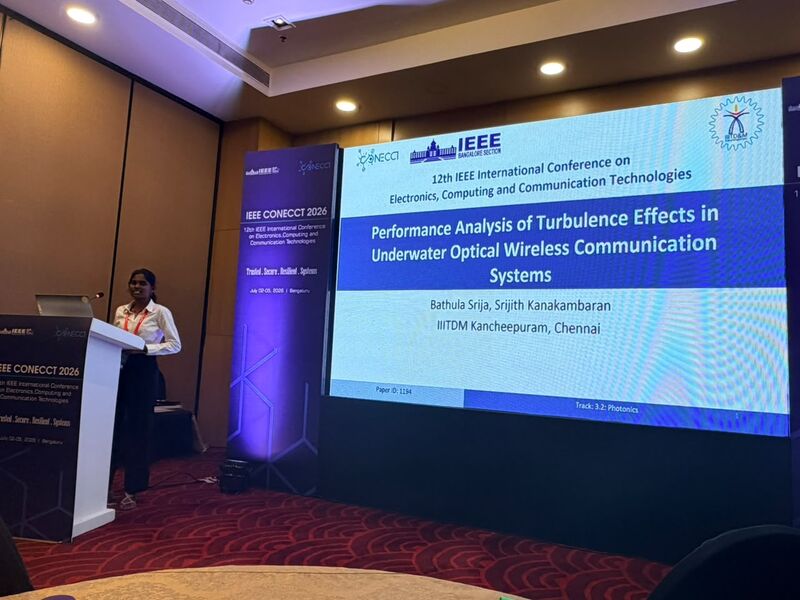
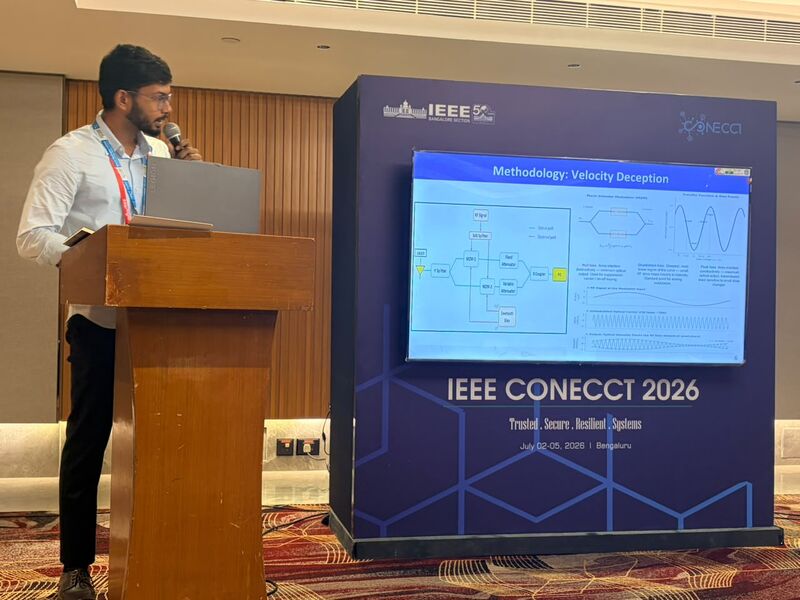
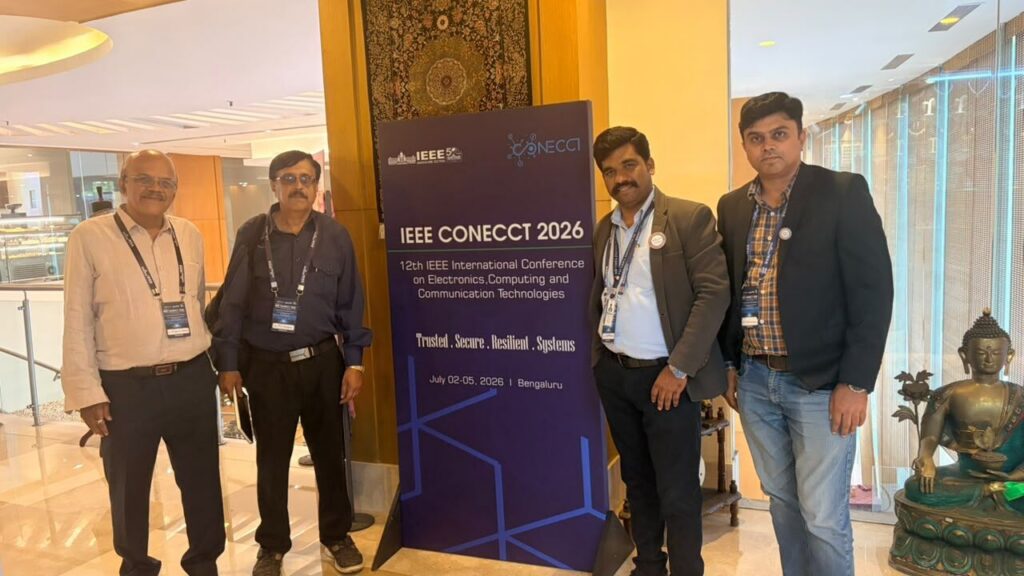
The Chapter’s activities extended from education and outreach into research dissemination through its involvement in IEEE CONECCT 2026, organized by the IEEE Bangalore Section in July 2026.
Under the conference theme “Trusted. Secure. Resilient Systems,” the dedicated track “Photonics for Sensing, Communication and Quantum Technologies” provided a forum for original research spanning integrated photonics, quantum technologies, optical communications, optical sensing, photonic radar, and AI-enabled photonic platforms.
Through peer-reviewed technical presentations, Q&A discussions, and interactions with experienced researchers, students and young investigators received feedback on emerging work involving high-speed data links, multicore fiber sensing, Bragg gratings, optical signal processing, and related technologies.
Embedding a dedicated photonics track within a broader engineering conference was particularly valuable because it introduced light-based technologies to researchers working across electronics, communications, computing, and other disciplines. It also encouraged conversations about the practical challenge of moving photonic technologies from laboratory demonstrations into resilient real-world systems.

Viewed together, these activities tell a larger story about the development of a regional technical community. A student might first encounter quantum technologies through an introductory conclave or World Quantum Day program. That interest can then develop through a newly established Student Branch Chapter, progress into hands-on workshops and extended technical courses, and eventually lead to research projects and presentations at conferences such as IEEE CONECCT.
That progression—from awareness, to learning, to experimentation, to research and professional participation—is an important part of building a sustainable technical community. The IEEE Photonics Society Bangalore Chapter is helping build a stronger pipeline for the next generation of photonics professionals in India.