
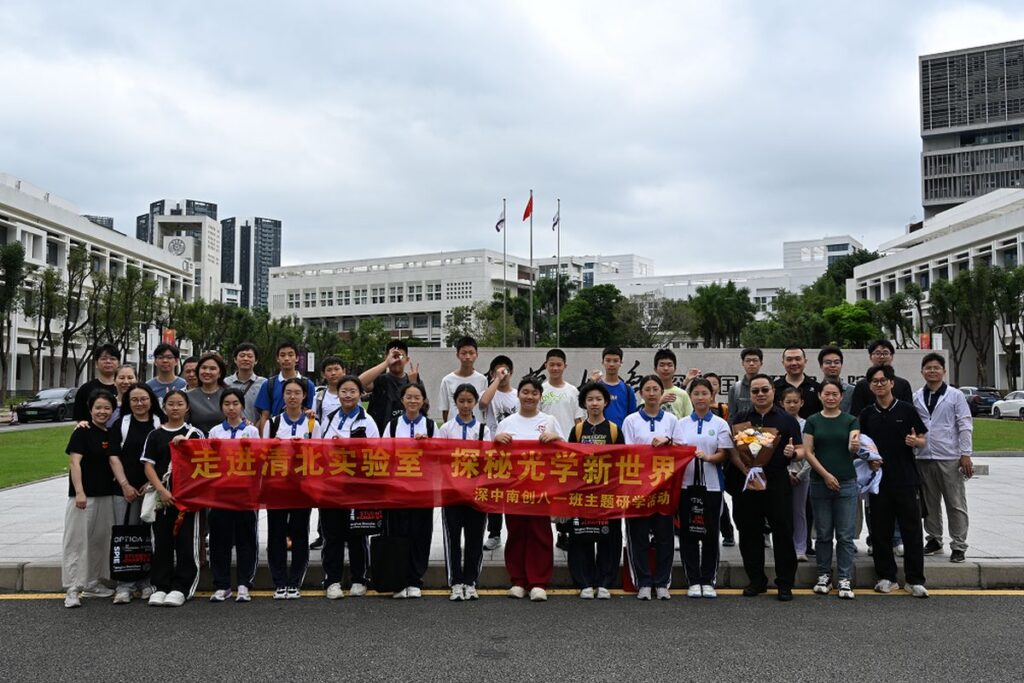
IEEE Photonics Society student volunteers in Shenzhen, China, opened their university laboratories this past spring to a new generation of scientists and engineers through “Illuminating the Future,” a full-day K–12 photonics outreach program.
Approximately 50 eighth-grade students from Nanshan District participated in the dual-campus experience, which connected Tsinghua Shenzhen International Graduate School (Tsinghua SIGS) and Peking University Shenzhen Graduate School. Through laboratory demonstrations, hands-on activities, conversations with graduate researchers, and a fiber-splicing workshop, students discovered how principles they encounter in middle-school physics are helping drive advances in communications, sensing, imaging, computing, and other emerging technologies.
The program was supported by 10 graduate volunteers from IEEE Photonics Society student communities at the two universities, along with the students’ physics teacher, creating a collaborative model that connected local schools directly with university research environments.
From Classroom Physics to Cutting-Edge Photonics
One of the central goals of “Illuminating the Future” was to make advanced photonics approachable for students who were still developing their foundational understanding of physics. Rather than introducing photonics as a distant or highly specialized field, organizers began with concepts and phenomena students could recognize and gradually connected them with more advanced technologies.
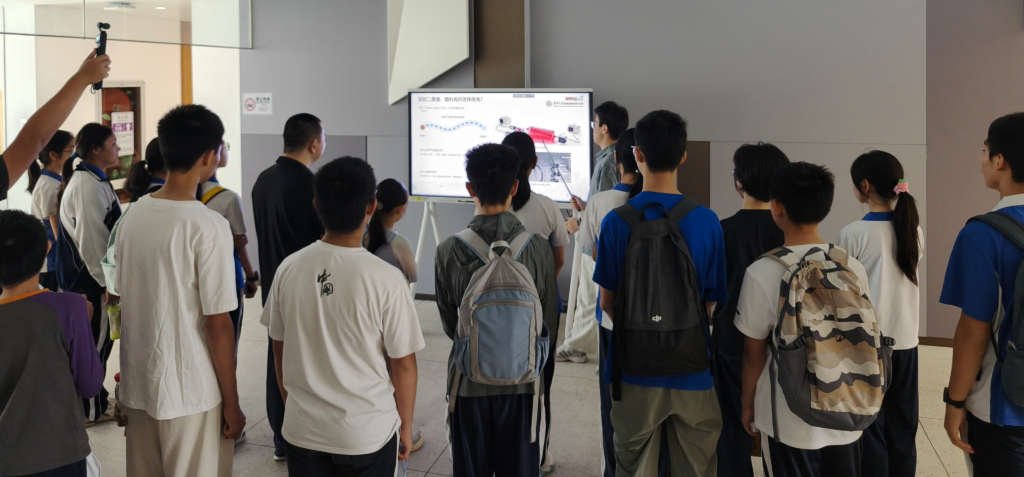
Throughout the day, students explored light transmission, visible-light LiDAR, dynamic 3D imaging, silicon photonics, and optical communications. Laboratory demonstrations allowed them to see how researchers control, transmit, detect, and manipulate light and how those capabilities translate into technologies used beyond the laboratory.
At Tsinghua SIGS, students learned how controlled light transmission and computational imaging can support applications ranging from optical communications and LiDAR to high-precision inspection. At Peking University Shenzhen Graduate School, students observed silicon photonic chips and manufacturing equipment while learning how light can be used to transmit and process enormous amounts of information.
Together, the experiences helped students see photonics not simply as a collection of physics concepts, but as an enabling technology behind many of the systems shaping the modern world.
Learning by Doing
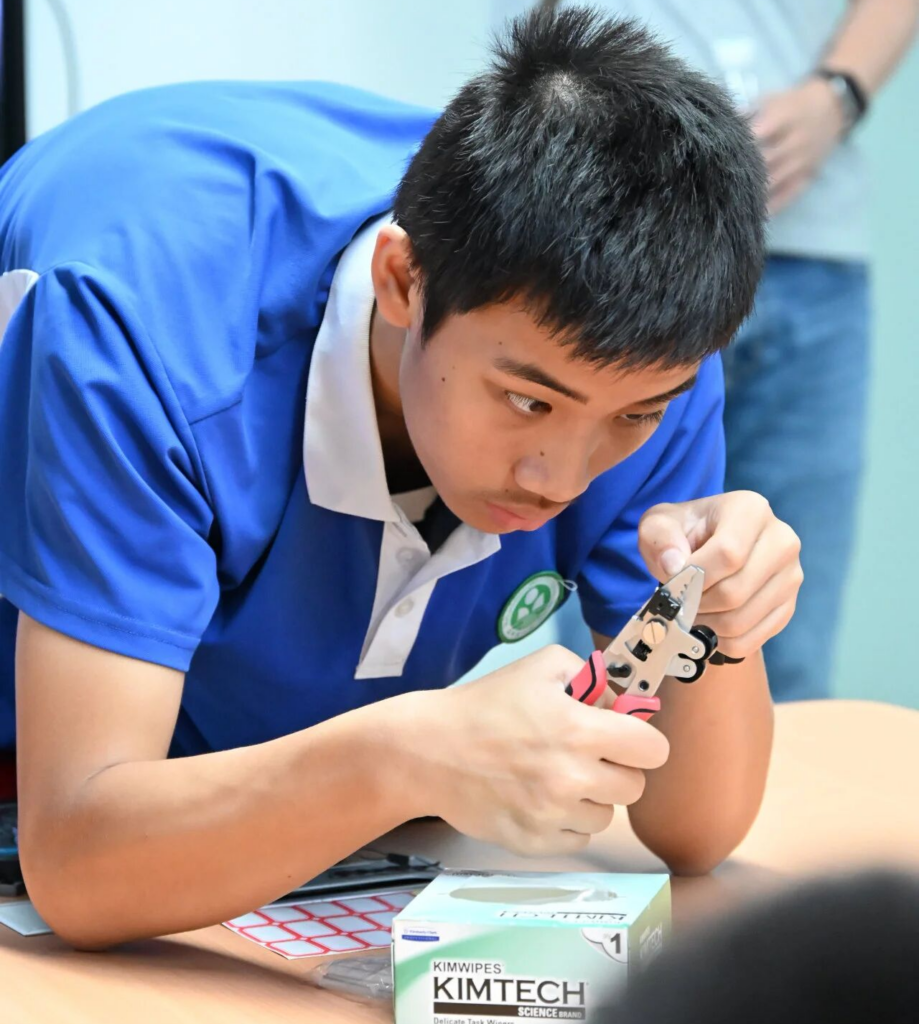
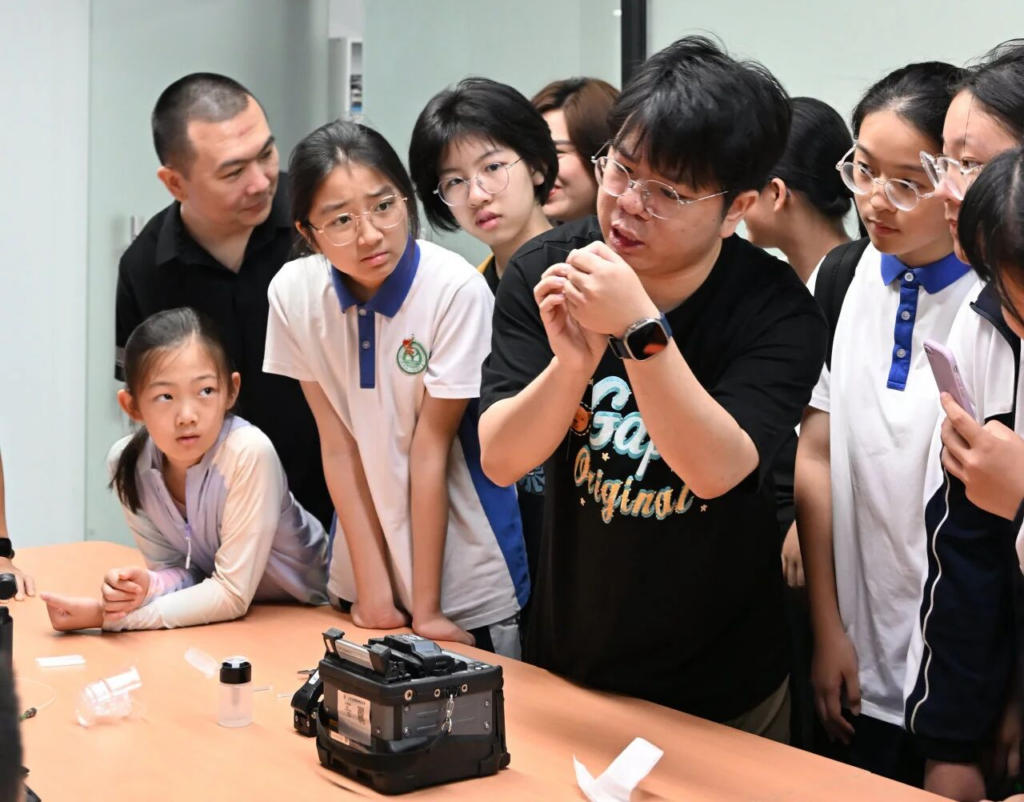
A highlight of the program was a hands-on fiber-splicing workshop that gave students an opportunity to work directly with the technology behind fiber-optic communications.
Under the guidance of graduate volunteers, students learned the steps involved in preparing and joining optical fibers, including stripping, cleaning, cleaving, aligning, and fusing them.
The exercise quickly demonstrated that successful engineering depends on more than sophisticated equipment. Students discovered how small variations in preparation and alignment can affect optical performance and how patience, precision, and attention to detail are essential to producing a successful result.
By completing the process themselves, students moved beyond simply hearing about optical communications and experienced one of its fundamental engineering practices firsthand.
This learning-by-doing approach extended throughout the program. Graduate volunteers served as laboratory guides and small-group mentors, giving students opportunities to ask questions, interact with research equipment, and discuss how scientific principles move from textbooks to real-world applications.
Finding Advanced Science in the Everyday World
Not every lesson required sophisticated laboratory equipment.
Discussions of Rayleigh and Mie scattering encouraged students to reconsider something they encounter every day: the colors of the sky. By exploring why the sky appears blue and why sunsets can produce vivid reds and oranges, students connected familiar natural phenomena with the behavior of light.
Those discussions helped reinforce one of the program’s broader messages—that the same fundamental properties of light students observe in everyday life also underpin advanced photonic technologies.
Creating those connections was particularly important for an eighth-grade audience. Instead of presenting frontier research as something disconnected from their current studies, the program showed students a pathway from the physics they are learning today to technologies they could one day help develop.
Building a Lab-to-Classroom Model
The program was designed in partnership with a local middle school and its physics teacher, who worked with organizers to align activities with concepts students had already encountered in their curriculum. That collaboration proved essential in addressing one of the event’s primary challenges: introducing a wide range of sophisticated photonics concepts within a single day without overwhelming participants.
A carefully sequenced curriculum moved students progressively from fundamental optical principles to imaging, sensing, silicon photonics, and communications. Demonstrations were combined with hands-on activities, while small-group mentoring allowed volunteers to adjust explanations and answer questions based on students’ individual levels of understanding.
Students were also encouraged to present and reflect on what they had learned. Giving them opportunities to explain concepts in their own words helped transform them from passive visitors into active participants and emerging science communicators.
A dual-campus format also demonstrated the value of collaboration among IEEE student communities. By bringing together volunteers and resources from Tsinghua SIGS and Peking University, organizers were able to expose students to a broader range of laboratories, research areas, equipment, and expertise than either institution could have provided alone.
The experience ultimately strengthened connections not only between the participating IEEE student groups, but also between the universities and the local school community. It established a foundation for future Lab-to-Classroom activities and demonstrated how student chapters can extend their impact beyond their own campuses.